
The Puggle: A Spirited Hybrid with a Royal Streak and a Beagle's Heart
It was barely seven in the morning when the small, wrinkled face nudged the edge of the bed, followed by a soft snort and a tail wagging just fast enough to stir the dust in a beam of sunlight. This was Biscuit, a three-year-old Puggle, and in his world, every day began with a firm belief that breakfast was a human right—specifically, his human’s duty to provide it. His morning routine was a masterclass in gentle persistence. If the beagle side of him said run and find the interesting smell under the porch, the pug side of him said why run when sitting by the food bowl and staring will work eventually? Usually, the pug side won.
Puggles, as a rule, are exactly this kind of contradiction. They are a hybrid breed, a cross between the energetic Beagle and the charming, flat-faced Pug. Created in the 1980s by Wisconsin breeder Wallace Havens, the goal was a small companion dog with more pep than a Pug but less wanderlust than a Beagle. In reality, a Puggle can fall anywhere on that personality spectrum. For Biscuit, that meant a dog who would chase a squirrel with alarming enthusiasm one minute, then flop dramatically onto the kitchen tile the next, as though the effort of existing was simply too much.
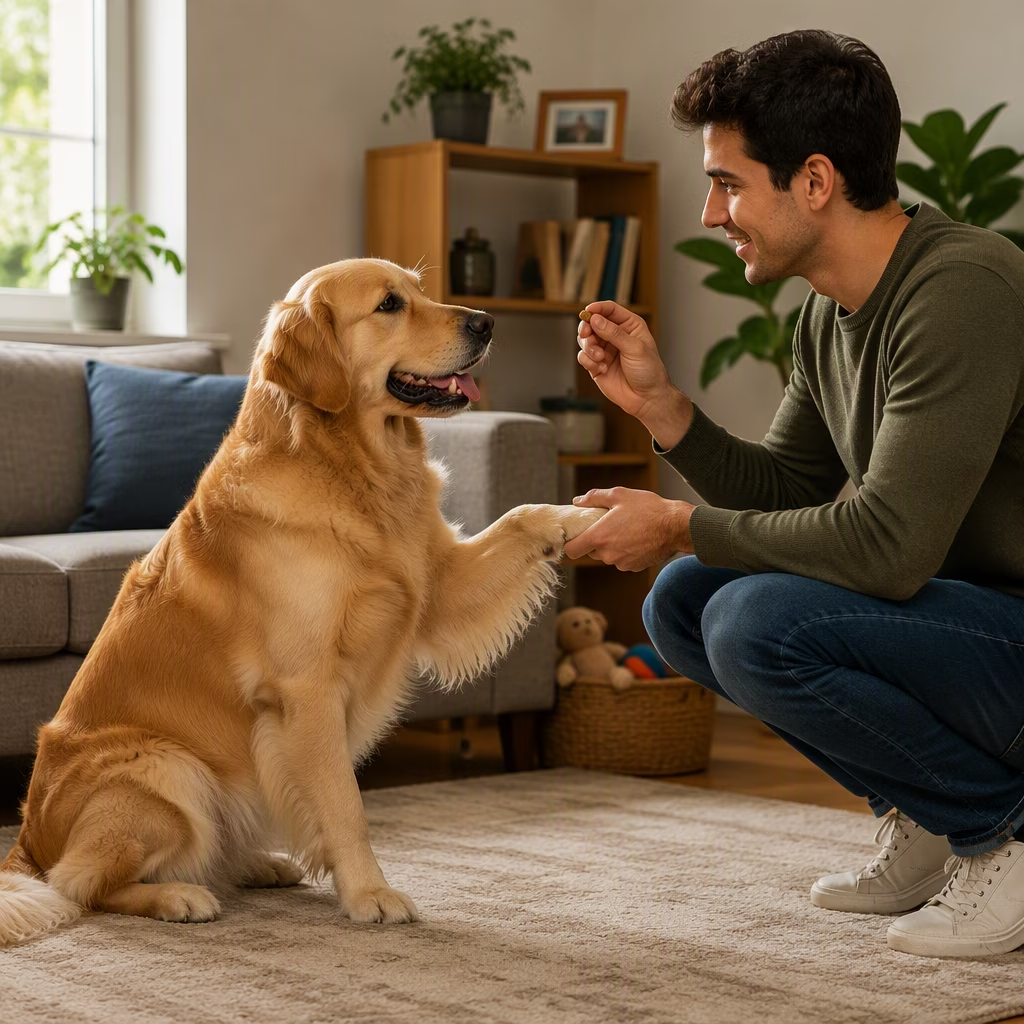
But behind that adorable, slightly confused face lies a lot of history. Pugs trace their lineage back to ancient China, where they were pampered lapdogs for imperial emperors and later English royalty. Beagles, on the other hand, were bred as working dogs in England, developed to help hunters on foot track rabbits. When those two very different worlds collided in the Puggle, the result was a dog with a stubborn streak inherited from both sides. According to Dr. Nell Ostermeirer, a veterinarian and spokesperson for Figo Pet Insurance, Beagles were independent hunters, while Pugs are known for their charming persistence in getting what they want. Combine those traits, and you get a small dog who will absolutely understand the command “leave it”—and then give you a long, thoughtful look before deciding whether to obey.
For owners, this means early socialization and positive reinforcement training are non-negotiable. “Puggles may bark at strangers, but they are generally too friendly to be a guard dog,” Dr. Ostermeirer added. That overgrown sense of friendliness means they make terrible protection animals, but excellent watch dogs—they will absolutely let you know when the mail carrier arrives, and then try to invite them inside for a snack.
Of course, Biscuit didn’t think much about history. He thought about his daily walk, which his person, a young woman named Elena, had learned to treat as a sacred appointment. Puggles need at least thirty minutes of exercise every single day. Skip that, and a Puggle’s boredom can turn into a one-dog renovation project. Chewed shoes, dramatic barking at nothing, and mysterious holes in the yard are all classic signs of an under-exercised Puggle. According to Dr. Teresa Manucy, a veterinarian at Chewy, without adequate exercise and mental stimulation, these dogs may act out with excessive barking, chewing, digging, or even house soiling.
Yet the breed's charm is undeniable. During their afternoon walks, Biscuit would trot with his nose to the ground, a habit inherited from his Beagle ancestors. He would inspect every fallen leaf as though it contained crucial information. When a squirrel appeared, his whole body would tense—the hunter’s instinct lighting up behind those soft brown eyes. Then, just as quickly, he’d forget the chase and sit down, needing a break. The transition was so abrupt that Elena often laughed out loud. “You were just a wolf two seconds ago,” she’d say, “and now you need a nap.” That, in a nutshell, was Biscuit.
Health-wise, Puggles can be a bit of a mixed bag—literally. Because they may inherit the Pug’s flat face, some Puggles are prone to brachycephalic syndrome, which can cause breathing problems and overheating. Others may have longer faces like a Beagle and breathe more easily. Patellar luxation, a condition where the kneecap dislocates, is another concern, as are skin infections in the facial folds, eye problems like dry eye, hip dysplasia, and obesity. A lesser-known issue is Musladin-Lueke Syndrome, or MLS, a genetic disease common in Beagles that affects connective tissues. Reputable breeders will test for these conditions, which is why doing your homework before bringing home a Puggle puppy is essential.
Feeding a Puggle is also a delicate art. They tend to be incredibly food motivated. Dr. Amanda Chambers, a veterinarian, warns that leaving food out all day is a fast track to obesity. Measuring portions and consulting a vet about caloric intake is the better approach. For Biscuit, this meant he lived in a state of constant, low-level hope that someone would drop a crumb. He had learned to position himself under the kitchen table during dinner with the strategic precision of a chess player, waiting.
Despite the challenges, Puggles are beloved companions. Their popularity boomed in the 2000s, thanks in part to celebrity owners like Uma Thurman and Julianne Moore. Social media stars like Earl the Grump and Bentley the Puggle keep modern dog lovers swooning. But the real magic of a Puggle is quieter than any celebrity endorsement. It’s the way they follow you from room to room, the soft snores that fill a quiet house, the stubborn refusal to come inside when a particularly good smell lingers by the fence.
For Elena, life with Biscuit was a lesson in compromise. She learned that a Puggle cannot be left alone for too long without toys or enrichment—separation anxiety is real, and the barking that comes with it is loud enough to make neighbors wonder. She learned that a short, low-maintenance coat still requires weekly brushing to manage shedding. She learned that a fenced yard or a leash is non-negotiable, because the Beagle nose wants to explore, and the Pug brain sometimes forgets that there are cars.
And in the evenings, when the heat of the day faded and the crickets started up, Biscuit would climb onto the couch, turn around three times, and settle against Elena’s leg with a deep, contented sigh. It was the sound of a dog who had spent the day being brave, curious, stubborn, and affectionate—often in that exact order. Not a guard dog. Not a hunter. Just a Puggle.
Which, really, is more than enough.