
Rat Terrier in 2026: Compact Hunter, Affectionate Family Companion
In 2026, the rat terrier remains a breed of vivid contrasts: a small farm-born hunter with a family-friendly heart, a smooth-coated companion with a workaholic's internal clock. Breed references describe a terrier group dog standing 10 to 13 inches in miniature form and 13 to 18 inches in standard form, weighing 10 to 25 pounds, with a short, shiny coat in white, black, brown, tan, or gray. Its lifespan of 12 to 18 years makes it a long commitment, and its temperament — intelligent, inquisitive, affectionate, lively, alert, and loving — explains why owners often call it a coiled spring wrapped in a smooth coat.
From Farm Pest Control to Family Watchdog
The rat terrier was created in the United States by combining traits from the fox terrier, bull terrier, Manchester terrier, old English white terrier, and other breeds. Farmers originally wanted a dog that could catch prey and hunt pests such as rats, which gave the breed its name, but they also wanted a watchdog and a playmate for children. That dual purpose still shapes the breed today: rat terriers are born hunters and excellent watchdogs, yet they can be loving, affectionate, and loyal to their family members.
During the 1910s and 1920s, breeders developed several lines. In the Midwest, rat terriers were crossed with whippets and Italian greyhounds to produce fast dogs for jackrabbit control. In Central and Southwest America, beagles were used to improve hunting skills and produce more pack-oriented dogs. In the 1920s, toy fox terriers that were too large for their breeding programs were crossed with rat terriers, resulting in toy-sized, or miniature, rat terriers. The breed was common on American farms but declined in the 1940s and 1950s as poison became a pest-control tool. A small number of breeders maintained the breed until its popularity returned in the 1970s. Two other types also emerged: the decker rat terrier, a slightly larger dog that excels in hunting and retrieves from water, and the hairless rat terrier, a smaller hairless dog available in miniature and standard sizes.
Exercise: A Turbocharged Engine in a Pocket Frame
The rat terrier is low-maintenance in grooming but high-maintenance in exercise and training. Because it was bred as a working and hunting dog, it has very high energy levels. Owners should expect to provide at least an hour of exercise each day, ideally in a fenced-in space with room to run. Rat terriers are fast runners and high jumpers, so a fence of 5 to 6 feet is important. They also have a strong prey drive, so off-leash play in open spaces is not recommended unless extensive recall training or desensitization has been done. Without enough physical and mental activity, a bored rat terrier can become destructive.
Apartment living is possible, but it comes with caveats. Rat terriers were bred to run, so small-space residents should plan for at least 40 minutes of exercise daily and should expect a strong instinct to bark. Long walks, training games, and puzzle toys can help, but the breed is not a sedentary lap dog. It is a pocket-sized alarm system with a turbocharged engine, always scanning the environment for action.
Grooming and Training
Grooming needs are modest. Owners can clean ears gently with a cotton cloth when wax builds up, avoiding cotton swabs that can damage delicate inner ear structures. Daily tooth brushing is ideal, though weekly brushing can still help protect against dental and oral disease. A rubber mitt or soft brush removes loose hair and debris. Bathing can be done as needed, but owners should note heavier shedding in fall, spring, and heat cycles.
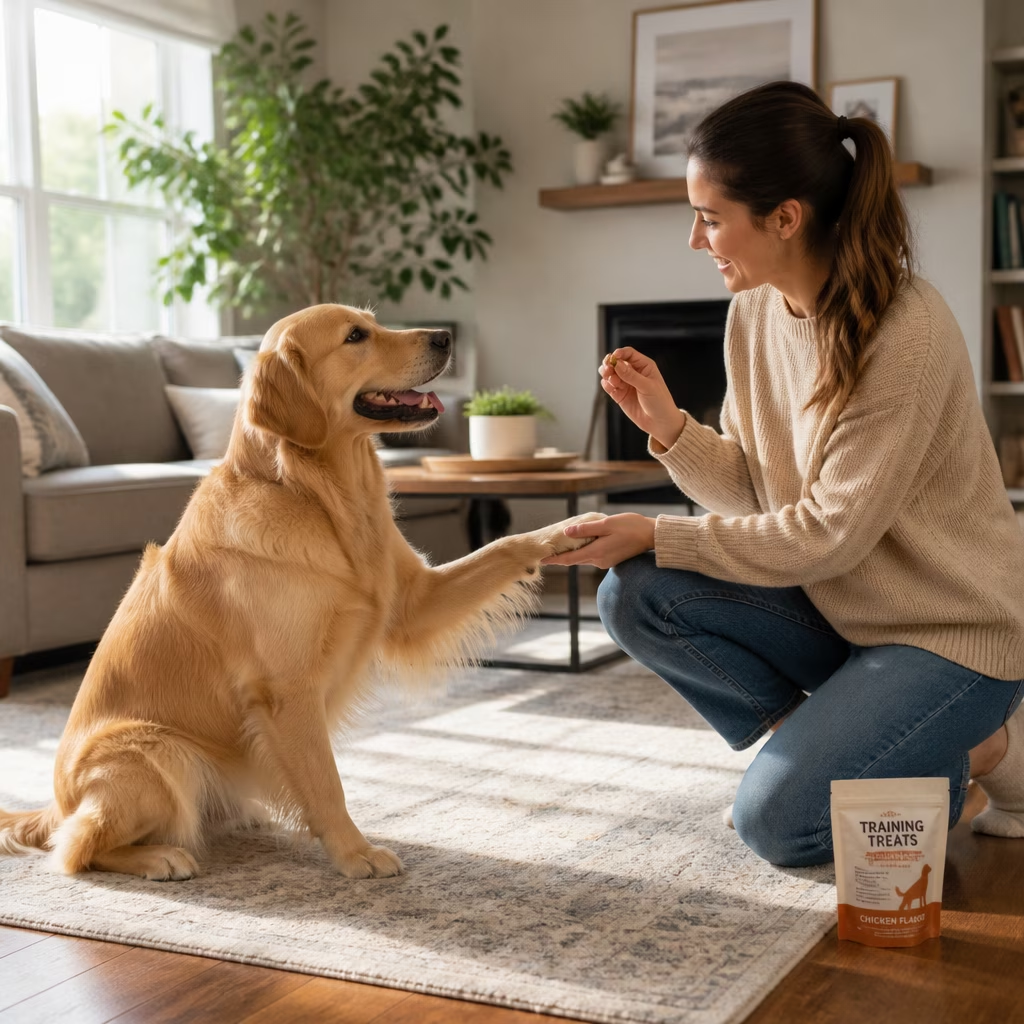
Training is vital. Like many terriers, the rat terrier is highly intelligent and can be stubborn. It does not live solely to please humans, which can frustrate first-time owners. Positive reinforcement, games, rewards, and varied training sessions work better than repetitive drills. A first-time owner should consider hiring a positive reinforcement trainer from day one. Socialization and obedience training are essential for proper behavior and manners.
Health, Diet, and Daily Care
Rat terriers are generally healthy, but they may be susceptible to certain conditions. Incorrect bites — overshot bite, undershot bite, and wry mouth — can occur due to a slightly deformed jaw bone. If a misaligned bite does not resolve by about 10 months, it is unlikely to correct itself, and surgery may be needed for serious cases that interfere with chewing or swallowing. Demodectic mange, caused by demodex mites, can affect dogs with suppressed or weakened immune systems and may show as redness, patchiness, or balding on the head, neck, or front legs. Allergies, including food, contact, or airborne allergies, can also appear. Veterinarians can help owners manage these issues and support a long, healthy life.
Diet depends on size, age, and activity level. Expect roughly 0.25 cups per day for dogs weighing 10 pounds or less and up to 2 cups per day for dogs weighing 30 to 40 pounds, using high-protein, high-quality dog food. Treats should be given in moderation because overeating can contribute to heart disease, obesity, and diabetes.
Pros, Cons, and Household Fit
| Pros | Cons |
|---|---|
| Loving, loyal, and affectionate to family members | High energy and exercise needs may challenge busy families |
| Excellent playmates for older children | Strong drives for chasing and digging |
| Low-maintenance grooming and bathing | May be difficult to train because of intelligence and stubbornness |
Households with small pets should be cautious. Because rat terriers were bred to hunt pests and vermin, bringing hamsters, guinea pigs, mice, or birds into the home is highly inadvisable. The breed may even consider cats and kittens as prey. Even a well-trained rat terrier may forget its manners around a squirrel, so a hamster ball rolling under its nose is a risky proposition. The breed is a forensic accountant of the backyard, auditing every scent trail with serious intent.
For families seeking a similar breed, Boston terriers, Cairn terriers, Australian terriers, and Teddy Roosevelt terriers are often mentioned. Rat terriers and Teddy Roosevelt terriers are not the same type; Teddies have longer legs, though they are otherwise similar in nature and physical characteristics. Prospective owners should research carefully, consider shelters and breed-specific rescue organizations, and ask ethical breeders detailed questions about living conditions, litter frequency, and parent dogs. In 2026, the rat terrier remains an excellent choice for active households with secure space, time for training, and a sense of humor about a small dog with a very large sense of purpose.