
My Puppy's Chewing Chaos: A Survival Guide
It started the moment Remmy waddled through my front door. One minute, she was a fluffy little cloud of golden fur, all innocent eyes and a wagging tail. The next? She was a four-legged demolition crew, convinced that every single object in my home was placed there for her personal gnawing pleasure. I'm not gonna lie—it was a real 'chew fest' from day one.
I still remember the morning I found my favorite running shoe under the couch, looking like it had been through a tiny hurricane. The sole was shredded, the laces were history, and there she sat, tail thumping, with a piece of leather dangling from her mouth. She gave me a look that said, “Hey, you left it there. Finders keepers.” That was my initiation into the world of puppy teething, and let me tell you, it was both hilarious and horrifying.
Puppies, as it turns out, explore the entire world with their mouths. It's not just about being naughty; it's how they learn. Remmy treated everything from my children’s stuffed animals to the corner of the wooden coffee table as a potential chew toy. The more forbidden the item, the better it seemed to taste. And during her teething phase, when those needle-sharp baby teeth were pushing through, she was a chewing machine. It was as if her little puppy brain was constantly screaming, “Must. Chew. Everything.”
But here’s the thing: chewing is totally normal. It strengthens jaws, relieves anxiety, and, oh yes, soothes those aching gums when new teeth are erupting. Boredom is another huge driver. Remmy is a social soul—she wanted my attention, and if I didn’t give it to her with a nice long play session, she’d find it by destroying something I loved. She was basically saying, “Hey, human, notice me! Or the rug gets it.”
I panicked at first. What if she swallowed something dangerous? I rushed her to the vet, heart pounding, half expecting an X-ray filled with sock fragments. The vet, a calm woman who’d clearly seen it all, gave Remmy a clean bill of health and then gave me a reality check. “No medical condition,” she said. “Just a textbook case of Puppy Mouth.” She suggested I redirect all that energy before my house turned into a slobbery art installation. That visit was the turning point.
I went home and saw my living room in a new light. It was a minefield of temptations. So I did the unthinkable: I got down on all fours and viewed the world from Remmy’s level. Wires peeked out from behind the TV stand like forbidden spaghetti, houseplants dangled within sniffing range, and the trash can was basically a buffet. Everything had to change. I decided the kitchen, with its easy-to-clean floor, would be her main domain until she proved trustworthy. I rolled up wires, stowed shoes in closets, and moved the trash can into a cabinet. Then I introduced her to her crate, a cozy den where she could decompress when I couldn’t supervise. Crate training wasn’t just about housebreaking—it became her safe haven and my furniture’s protector.
Now came the fun part: toys. I learned quickly that not all chew toys are created equal. The vet warned me off animal bones, hooves, and antlers—too hard and risky for a growing puppy’s teeth. Rawhides and pig’s ears? She said there’s a lot of debate, so I decided to skip them and only use what felt bulletproof. Remmy fell in love with hollow rubber toys that I could stuff with peanut butter, squeaky stuffed animals that she could “kill” repeatedly, and nylon bones she could gnaw on for hours. I avoided giving her old socks or shoes, because, honestly, how is a puppy supposed to know the difference between your $120 trainers and a rag? It seemed like a cruel joke to play on someone with a brain the size of a walnut.
But puppies get bored fast. What was fascinating on Monday was old news by Wednesday. That’s when I started the rotation game. Every few days, I’d swap out half of her toys, and she’d race to them like it was Christmas morning. This little trick kept her so interested in her own things that she stopped eyeing the kitchen cabinets. Mental stimulation for the win.
Training her to trade objects was a game-changer. Whenever she snatched something she shouldn’t—say, a stray glove—I’d calmly say “give,” and offer a tiny treat near her nose. The first few times, she looked at me like I was trying to swindle her out of a prized possession. But soon enough, she started dropping the glove and diving for the treat. I was careful not to throw a party or shower her with praise during the exchange, because the last thing I wanted was a puppy who thought stealing my stuff was a shortcut to snacks. It was a tricky balance: reward the drop, not the theft.
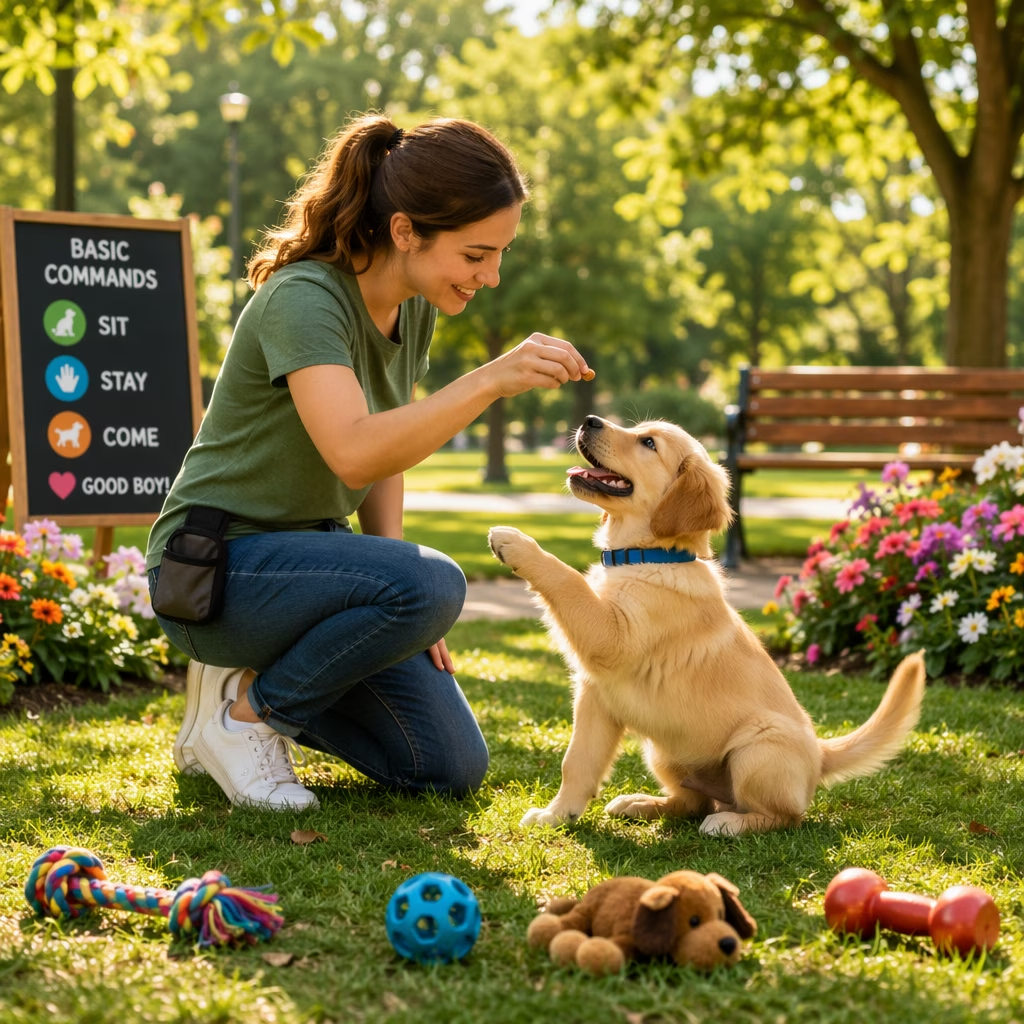
Redirecting became my superpower. If I caught her with her teeth on the chair leg, I’d gently guide her away, grab a squeaky toy, and make it dance and squawk like it was the most amazing thing on the planet. She’d charge over, ready to play, and I’d heap praise on her for chewing the right thing. During teething episodes, I’d soak a washcloth, twist it up, and freeze it. That simple puppy teething ring was magic. She’d lay on her bed, flop a paw over it, and gnaw away, her eyes half-closed in relief. It was like a tiny spa treatment for her gums.
Here’s another truth I learned: a tired puppy is a good puppy. Once her vaccinations were complete, we started daily walks and active play sessions. Fetch in the backyard turned her from a chewy little monster into a content, floppy-eared angel. Regular exercise and one-on-one cuddle time drained her destructive energy. She didn’t need to shred a pillow when she was busy snoozing on one.
These days, Remmy is a model citizen. I won’t pretend we didn’t have moments when I found a half-eaten magazine or a mysteriously damp corner of the rug. But consistent training, a puppy-proofed space, and a heap of patience got us through. She still explores the world with her mouth, but now it’s on my terms. And when she picks up her nylon bone and trots over to my feet, I know we both learned something about growing up together. If you’re in the thick of it right now, just remember: they’re not giving you a hard time; they’re having a hard time. And with the right tools and a bit of understanding, you’ll come out the other side with your shoes intact—and your heart full.