
My Journey Training a Jumping Dog: From Frustration to Understanding
As I walk through my front door in 2026, I’m no longer greeted by a furry tornado of paws and slobber. My dog, Buddy, now sits patiently, tail thumping a steady rhythm of pure joy on the floor. This calm welcome is a far cry from the chaotic, sometimes dangerous, jumping greetings that defined our relationship for years. I remember how friends and family would brace themselves, some even hesitant to visit, annoyed or worried about being knocked over. Back then, I didn’t understand that Buddy wasn’t being ‘bad’—he was simply speaking his language, and I wasn’t listening.
You see, canines don’t communicate with words. Their world is built on actions, postures, and behaviors. When I finally paused my frustration and observed, it clicked. I recalled watching Buddy meet other dogs; they’d approach nose-to-nose, a direct and intimate canine hello. Why was I surprised he wanted the same with me? His exuberant leaps weren’t disobedience—they were his heartfelt attempt to bridge the height gap, to get closer to my face, and to shower me with the affection he felt after a long day apart. He was saying, ‘I missed you!’ in the only way he knew how.
The turning point came when I embraced one, non-negotiable principle: consistency. My training approach had to be unwavering, and I needed my entire household—and willing visitors—to follow the same script. Dogs are brilliant at reading our body language and inconsistencies only breed confusion. Every single greeting, no matter who was involved, had to follow the new rules. This predictability became the foundation of Buddy’s learning.
Our core training method was a blend of ignoring unwanted behavior and rewarding desired behavior. The routine was simple but required immense patience:
-
Calm Entrance: I’d enter the house quietly, avoiding high-pitched, excited greetings that would wind him up.
-
The Ignore: If he jumped, I’d instantly become a statue. I’d turn my back, cross my arms, and look away, withdrawing all attention.
-
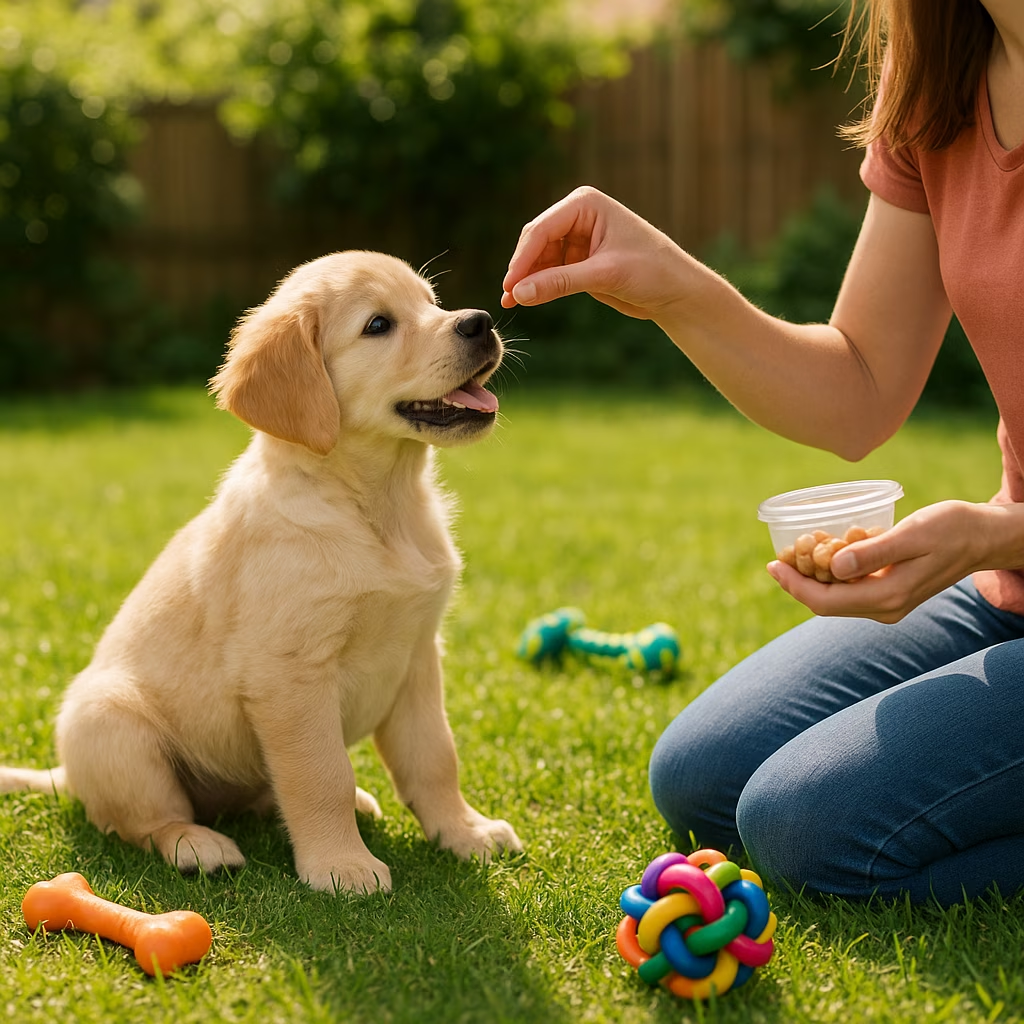
The Reward: The moment his paws hit the floor and he settled—even for a second—I’d turn, praise him warmly, and offer a treat.
In the early, chaotic stages, we used tools for control and safety:
-
Leash-on Indoors: Keeping his leash on during practice sessions let me gently guide him back if excitement took over.
-
Head Halter: For situations with elderly relatives, a gentle head halter gave me safe, pain-free control to prevent jumps without any struggle.
We started small. Our first practices weren’t after my 8-hour workday, but after I’d merely stepped out to get the mail. We mastered calm greetings in that low-distraction environment before slowly increasing the challenge: longer absences, then greetings with one calm visitor, then more. This gradual exposure built his confidence and understanding.
Teaching Buddy specific, alternative cues was a game-changer. It gave him a ‘menu’ of acceptable behaviors to choose from. We worked on:
| Cue | Desired Behavior | Purpose |
|---|---|---|
| "Sit" | Plant his bottom on the floor. | The default, polite greeting position. |
| "Snuggle" | Lean his body against my legs for pets. | A loving, grounded alternative to jumping for affection. |
| "Place" | Go to his bed and lie down. | For when he (or I) needed space during exciting events. |
The "snuggle" command was our favorite breakthrough. I’d say the word and hold my hands low. He learned to lean in for hugs and chest scratches. The positive reinforcement—praise, pets, and occasionally treats—made this his new go-to for seeking love. He realized he didn’t need to jump to get my attention.
However, I learned that jumping isn’t always about joy. Sometimes, it’s a cry for help. I began keeping a journal when Buddy’s jumping seemed sudden or targeted. I asked: Was his routine disrupted? Did a loud noise precede it? I connected the dots—his jumping on me during thunderstorms wasn’t excitement; it was fear-based anxiety. He was seeking comfort and security.
This realization led me to seek professional guidance. A veterinary behaviorist helped us identify triggers and craft a desensitization plan. Key strategies included:
-
Creating a Safe Haven: We made his crate a palace of positivity—filled with favorite toys and treats—never a punishment. It became his retreat during scary times.
-
Managing Triggers: We used a two-pronged approach:
-
Avoidance: Using white noise machines to muffle storm sounds when possible.
-
Gradual Desensitization: Playing recorded thunder sounds at a barely audible volume while he played, very slowly increasing the volume over weeks, always ensuring he stayed under threshold.
-
Buddy, I later understood, was somewhat under-socialized as a pup. He missed some key canine communication lessons. For dogs like him, jumping can be a complex soup of excitement, fear, or even frustrated communication. They lack the social tools to ‘read the room’ (or the other dog). Helping them is a delicate balance of providing structure and avoiding overwhelming situations.
Our toolkit expanded:
-
Cues for Structure: Clear commands helped him navigate confusing social settings.
-
Selective Avoidance: We temporarily avoided uncontrolled dog parks, as he couldn’t interpret strange dogs’ body language, which risked reactive behavior.
-
Anxiety Techniques: The same calm, patient methods used for his storm fear applied to new social experiences.
There is no universal fix. Every dog’s personality and history are unique. My journal became essential, mapping the ‘when, where, and why’ of his jumps to reveal his personal patterns. Once identified, the right combination of techniques could finally be applied.
Today, the frantic jumper is a memory. In his place is a confident, communicative companion who knows how to ask for affection in ways we both understand. The journey taught me more than dog training; it taught me about empathy, patience, and the profound bond that forms when you learn to speak a little of your best friend’s language. It’s a connection that continues to grow stronger every single day. 🐾