
Living with a Silken Windhound: A Tale of Grace and Devotion
I still remember the first time I saw a silken windhound in full stride, a blur of silver and white tearing across a fenced field in the early autumn of 2025. It moved not like a dog, but like a piece of quicksilver gliding silently over the grass, every line of its body singing of speed and purpose. I had been searching for a breed that could match my active lifestyle—someone to join me on dawn hikes, try their paws at agility, and then curl into a crescent beside me while I read. That moment, watching the silken windhound run, I knew I had found my companion. Two months later, I welcomed Miso, a cream-and-grey puppy with ears like delicate sails catching a quiet wind, into my life, and I have never looked back.
The silken windhound is a sighthound of medium build, developed in the United States to blend the aristocratic bearing of a borzoi with the sociable warmth of a devoted family pet. Although the breed officially earned its name in 1998, its roots stretch back to the vision of Francie Stull, a borzoi breeder who wanted a smaller, long‑coated coursing dog with a temperament gentle enough to live happily beside children, cats, and even the occasional couch potato afternoon. Miso embodies this duality perfectly. One minute he is a torpedo of enthusiasm, chasing a flirt pole as if his life depends on it; the next he is a breathing pool of calm, his coat falling across the sofa like moonlight combed out into a waterfall.
I often describe silkens as athletes wrapped in a philosopher’s soul. They need their daily dose of motion—about 60 minutes of exercise keeps Miso’s muscles supple and his mind easy—but they will never badger you for more once their tank is empty. Lisa Golebiewski, vice president of the International Silken Windhound Society, once said that many owners call their dogs “velcro dogs,” and I can attest to that. Miso follows me from room to room, not with anxious attachment, but with a quiet assumption that everything we do, we do together. If I’m cooking, he’s a patch of warmth lying on the kitchen mat. If I’m training, his almond‑shaped eyes track every treat pouch movement with a focus that makes trick training feel like a conversation between old friends.
The breed’s history fascinates me as much as its personality. The foundation stock was drawn from champion borzoi lines, a multigenerational line of small whippet‑based lurchers, and course‑bred whippets. The inaugural silken windhound litter was born in 1985, but the breed waited until 1998 to be named and another year for the ISWS to be established. I discovered that the United Kennel Club granted recognition in 2011, and while the American Kennel Club hasn’t followed yet, the community around this dog thrives on grassroots organization. Joining the ISWS connected me with breeders who spend years planning litters, prioritizing health and temperament over profit. My breeder showed me DNA‑verified registrations and health clearances that went back generations, which gave me enormous confidence. Silkens can live between 14 and 18 years, and some have even blown past 20, a longevity that feels like a promise whispered through careful selection.
Caring for Miso’s coat has been a lesson in low‑effort elegance. His fur, which can be straight, wavy, or wreathed in gentle curls, repels dirt with almost magical indifference. I brush him once a week with a pin brush, and the resulting fluff is no worse than a handful of dandelion seeds. He doesn’t “blow” his coat like a golden retriever; instead, he sheds modestly, with a slight uptick in spring and fall, as if nature merely nudges his wardrobe rather than discarding it entirely. A monthly bath, regular nail trims every two to three weeks, and daily tooth brushing complete the ritual. Because silkens have the long, narrow muzzle typical of dolichocephalic dogs, they produce less saliva, which can make them a bit more prone to dental issues. I counteract that with enzymatic chews and diligent brushing, and Miso’s vet always compliments his pearly whites.
Nutrition has become a shared journey. I feed Miso a high‑quality diet that meets AAFCO standards, splitting his meals into two portions a day. As a puppy, he needed three small feedings to fuel his rapid growth, and I made sure he had access to large, enclosed spaces for free running—something Golebiewski strongly recommends for musculoskeletal development. Today, his diet mixes premium kibble with occasional fresh toppers, and he evaluates every bowl with the solemnity of a tiny connoisseur. I’ve learned that keeping a silken lean isn’t just aesthetic; it’s protective. Extra weight can stress their deep chests, so I measure every scoop and celebrate when I can feel his ribs beneath a thin veil of silk.
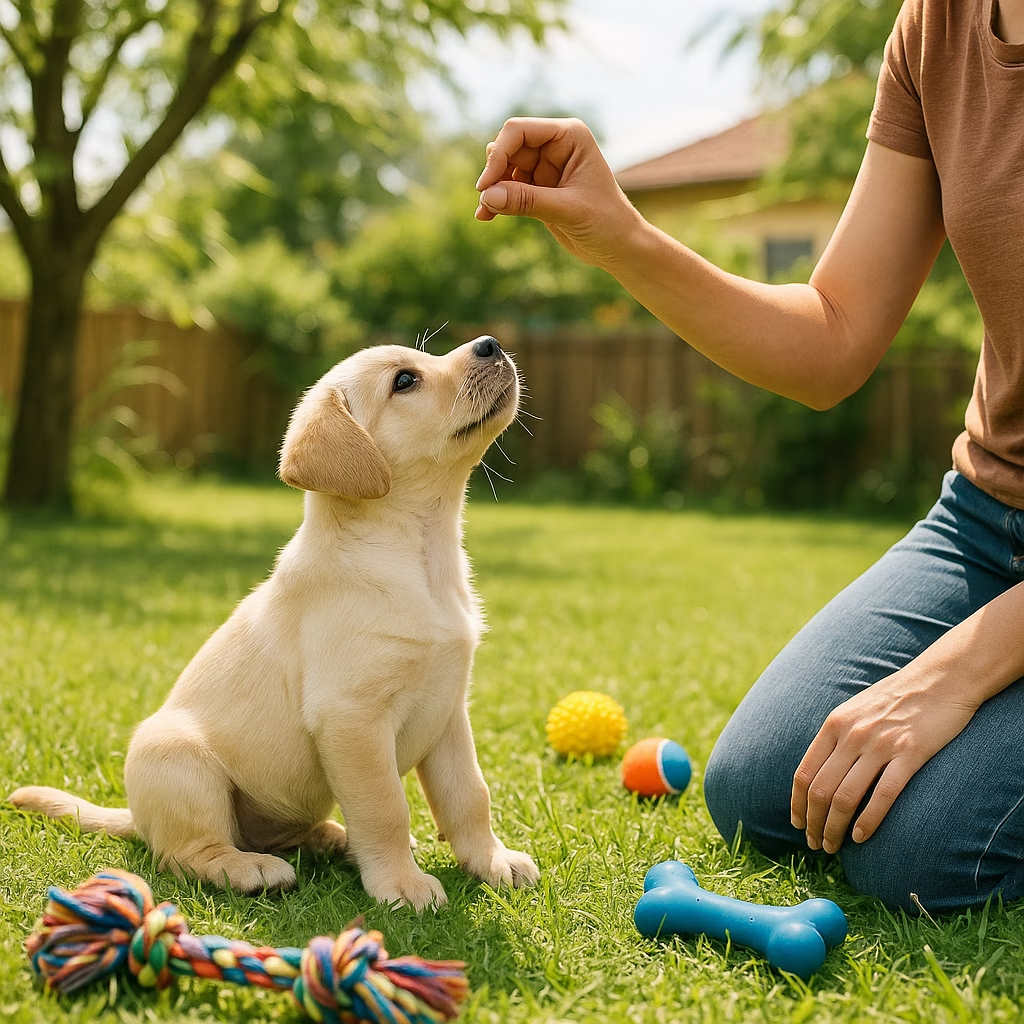
Training a silken windhound is less about dominance and more about partnership. They are startlingly intelligent and eager to please, which makes positive reinforcement the natural choice. I started Miso on basic commands at eight weeks, using tiny cubes of chicken as currency. His recall training remains a work in progress—anything small and furry can momentarily reprogram his brain into hunting mode—but daily practice in a fenced arena has built a reliable “come” that I celebrate like a small victory each time. I’ve found that puzzle toys and scent work keep his active mind from inventing its own entertainment, which in a sighthound often involves redecorating the house with shredded paper.
One of the most reassuring aspects of sharing life with a silken windhound is their robust health. Like any breed, they have a handful of conditions worth screening: MDR1 sensitivity, a genetic drug sensitivity that a simple DNA test can flag; occasional cardiac concerns such as mitral valve disease; inherited eye disorders like Collie Eye Anomaly; and autoimmune thyroiditis that may lead to hypothyroidism. My breeder had tested both parents for everything recommended by the ISWS, and I continue with annual eye exams and thyroid panels. So far Miso’s heart sings as clearly as a morning bird, and I mean that quite literally—his veterinarian once remarked that his cardiac rhythms were the steadiest she had heard all week.
Living with a silken windhound means making peace with their prey drive. I keep Miso on a leash during walks near woodland, because a bolting squirrel can turn him into a whistling arrow before I’ve blinked. Our yard is securely fenced, and I installed a coyote‑proof six‑foot barrier that also serves as a canvas for his daily zoomies. Inside, he coexists peacefully with my two cats, a truce forged by slow introductions and a childhood spent together. He will occasionally point a quivering nose toward the resident tabby when she dashes across the room, but a gentle “leave it” brings his attention back like a magnet clicking into place.
Adopting a silken windhound requires patience and a willingness to wait. The breed is rare, and reputable breeders produce only one or two litters a year. I spent months on a waitlist, staying in touch with ISWS members and checking rescue networks like Silken Windhound Health and Rescue. Puppies typically cost between $2,000 and $4,000, a reflection of the care poured into health testing, early socialization, and pedigree maintenance. For me, the wait was a quiet investment in time—a period spent reading everything I could about coursing hounds and preparing my home for a dog that would teach me as much as I would teach him.
For anyone drawn to a borzoi’s elegance but craving a smaller, more sociable package, the silken windhound is a revelation. They are not watchdogs; Miso may offer a soft “woo” to announce a visitor, but he quickly reverts to a wagging welcome. They are not for homes that can’t provide a safe space to sprint. But if you can offer a blend of active companionship and quiet hours, you’ll find a heart wrapped in silk. Every evening, when Miso tucks his head into the curve of my shoulder and exhales a sigh that sounds like contentment distilled, I am reminded that some bonds are woven with thread as fine as the coat that gives this breed its name—strong, supple, and endlessly gentle.