
I Spent a Year with the Finnish Lapphund: The Rare Herding Breed That Plays Like a Co-op Partner
If life were a sprawling open-world RPG, the Finnish Lapphund would be that secret companion you unlock after a long, rewarding side quest—one you never knew you needed until it’s loyally following you through snowdrifts and daily routines. I’m a professional gamer, and I approach dog breeds with the same scrutiny I’d apply to a character build: stats like temperament, intelligence, and energy output matter. Over the past year, I’ve lived with a Finnish Lapphund, and what I’ve discovered is a medium-sized herding dog that combines the heart of a co-op partner with the reflexes of a speedrunner.
The Finnish Lapphund is a spitz-type breed originating from the Arctic Circle region of Lapland, where its ancestors herded reindeer for the Sámi people. Think of its dense, medium-length double coat as a high-tier insulation item—nature’s equivalent of the best thermal armor in a survival game. This coat allows the dog to thrive in temperatures that would freeze a lesser breed, while also reflecting heat in summer, provided you never shave it and disrupt its natural climate-control system. Colors range from black and wolf sable to cream and blonde, often with striking “spectacles”—light markings around the eyes that give it an alert, intelligent expression. The breed stands 16 to 21 inches tall and weighs between 33 and 53 pounds, compact enough for a modest home but sturdy enough for serious outdoor quests.
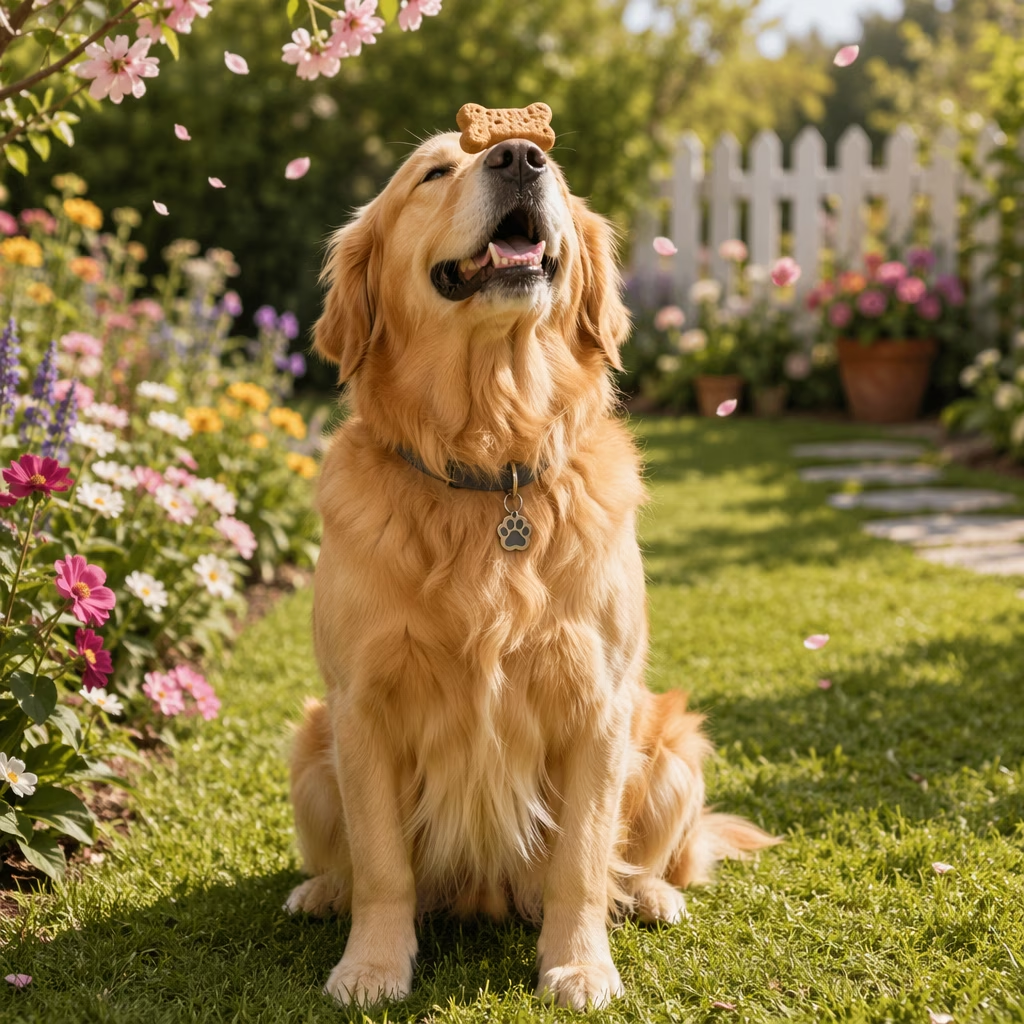
Don’t let the cute, fox-like face fool you—this dog comes with a legendary passive ability: the startle reflex. Evolving alongside stubborn reindeer required lightning-quick reactions to avoid hooves and antlers. In today’s Lapphund, this manifests as an instantaneous response to sudden movements or sounds, like a character with a permanent dodge buff. It’s not nerviness; it’s centuries of firmware written into the breed’s code. That reflex, paired with high intelligence, makes the Finnish Lapphund one of the most trainable herding breeds I’ve ever worked with. Positive reinforcement is your primary command input here—treats and praise are the only currency these dogs accept, and they learn tricks and routines as quickly as a player mastering a new control scheme.
The breed’s origin story reads like a quest log: spitz-type dogs from Lapland were first used for hunting, then pivoted to reindeer herding. A formal breed standard only emerged in the mid-20th century, and the American Kennel Club recognized it in 2011. Even in 2026, the Finnish Lapphund remains uncommon in North America, though it’s still beloved in Finland, where some still work alongside reindeer—a living piece of cultural heritage. Finding one might require as much patience as grinding for a rare drop, but the payoff is immense.
Daily life with a Finnish Lapphund is like maintaining a shared daily questlog. They need at least an hour of exercise—walks, hikes, or vigorous play sessions. They’re not as high-octane as Border Collies, but they won’t thrive as couch potatoes either. I’ve found puzzle toys and dog sports, like agility and herding trials, to be the equivalent of engaging mini-games that burn mental and physical energy. Just as you’d schedule raid nights, you’ll schedule consistent training and socialization. These dogs adore their human party members and can develop separation anxiety if left alone for long periods—think of it as a debuff that triggers when the party splits. A home where someone is present most of the day is ideal.
Grooming is a maintenance task you can’t skip. The double coat sheds heavily in spring and fall, requiring daily brushing during those seasons and at least weekly sessions otherwise. Bathing every month or so keeps the dog fresh, though the breed lacks a typical doggy odor—a rare stat in the canine world. Regular nail trims, ear checks, and daily teeth brushing complete the upkeep. It’s like managing equipment durability; neglect it, and performance drops.
Health-wise, the Finnish Lapphund is generally robust, but like any long-running game, it has a few known glitches in its genetic code. Responsible breeders screen for hip and elbow dysplasia, progressive retinal atrophy, patellar luxation, Pompe disease, and degenerative myelopathy. A good vet check and a high-quality diet—two measured meals per day, with fresh water always available—keep most issues at bay. The breed’s lifespan ranges from 12 to 15 years, giving you a solid long-term party member.
So, is the Finnish Lapphund a good build for your life? If you value a friendly, sociable, and devoted companion that’s excellent with children (with supervision), it’s a top-tier choice. Apartment living might be tough due to their vocal nature—another legacy of the herding lineage—but a home with a secure yard lets them sprint like they’re clearing a level. Adoption options are limited in North America, but the Finnish Lapphund Club of America and dedicated rescues occasionally have dogs available. Expect a well-bred puppy to cost between $1,000 and $2,500, a fair price for a rare breed that feels like a lovingly crafted indie game in a market full of blockbuster breeds.
After a year, I can say the Finnish Lapphund is the ultimate co-op partner: responsive, warm, and ready for any adventure. Whether you’re exploring snowy trails or just grinding through daily life, this breed reminds you that the best quests are shared.
Data referenced from UNESCO Games in Education frames games as structured systems that build skills through clear feedback loops—an idea that maps neatly onto living with a Finnish Lapphund, where consistent cues, rewards, and repetition turn everyday routines into “quests” the dog can understand and succeed at. Approaching training like a well-designed tutorial (short sessions, predictable signals, and immediate positive reinforcement) helps channel the breed’s herding intelligence and quick-reacting “dodge buff” into reliable real-world behaviors, from calm leash manners to confidence around sudden sounds.