
How to Keep a Dog Mentally and Physically Active at Home
In the winter of 2026, a dog named Scout watched the snow pile high against the windows while his owner, Maya, wondered how to burn off his endless energy without leaving the house. Whether the reason is illness, a quarantine period, severe weather, or another form of social distancing, many dog guardians have faced the same challenge. Just like people, dogs require daily physical exercise, cognitive enrichment, and social interaction. When outdoor walks and park visits are not possible, a little creativity can transform a home into a playground and hunting ground.
Dogs are not simply bowl-fed creatures by nature. Although cats often claim the title of skilled predator, dogs also carry a deep hunting drive. Instead of presenting every meal in a plain bowl, a pet parent can turn mealtime into an indoor treasure hunt. Scatter a portion of the dog's kibble or a few small treats in areas around the house, such as near a favorite bed, under a low table, or along a hallway. If the dog has never searched for food this way, avoid switching completely away from the bowl. A difficult first hunt can frustrate a pup and make the game less enjoyable. Offer most of the meal in the usual bowl and hide only a small amount in spots the dog already loves to visit.
Commercial puzzle feeders and interactive toys are another excellent option. As veterinary professionals and animal behaviorists learn more about canine needs, the market for enrichment products continues to expand. Stationary puzzle toys, rolling feeders, and treat-dispensing balls all encourage problem solving and slow down fast eaters. When introducing any new puzzle device, set the dog up for success. Choose a beginner-friendly design first, place a few treats inside, and let the dog explore without pressure.
Handmade Snuffle Mat for Nosework
A snuffle mat is essentially a soft puzzle feeder that lets a dog use its nose to forage for hidden food. It provides excellent mental stimulation and is easy to make at home. The only supplies needed are a rubber mat with holes throughout and a length of fleece, typically up to one yard depending on the mat size. Cut the fleece into strips about one to one and a half inches wide and six to seven inches long. For a tidy look, keep every strip the same length; for a more textured appearance, small differences are fine.
To build the mat, thread one fleece strip through a hole in the rubber mat, then bring it back through the adjacent hole and tie a single knot. Continue this process across one row of holes, then repeat for each additional row. Keep all knots and fleece tails on the same side of the mat so the opposite side stays flat on the floor. After the mat is covered, sprinkle a few pieces of kibble or treats among the fleece strips. The dog can then nose around and sniff out the hidden rewards at its own pace.
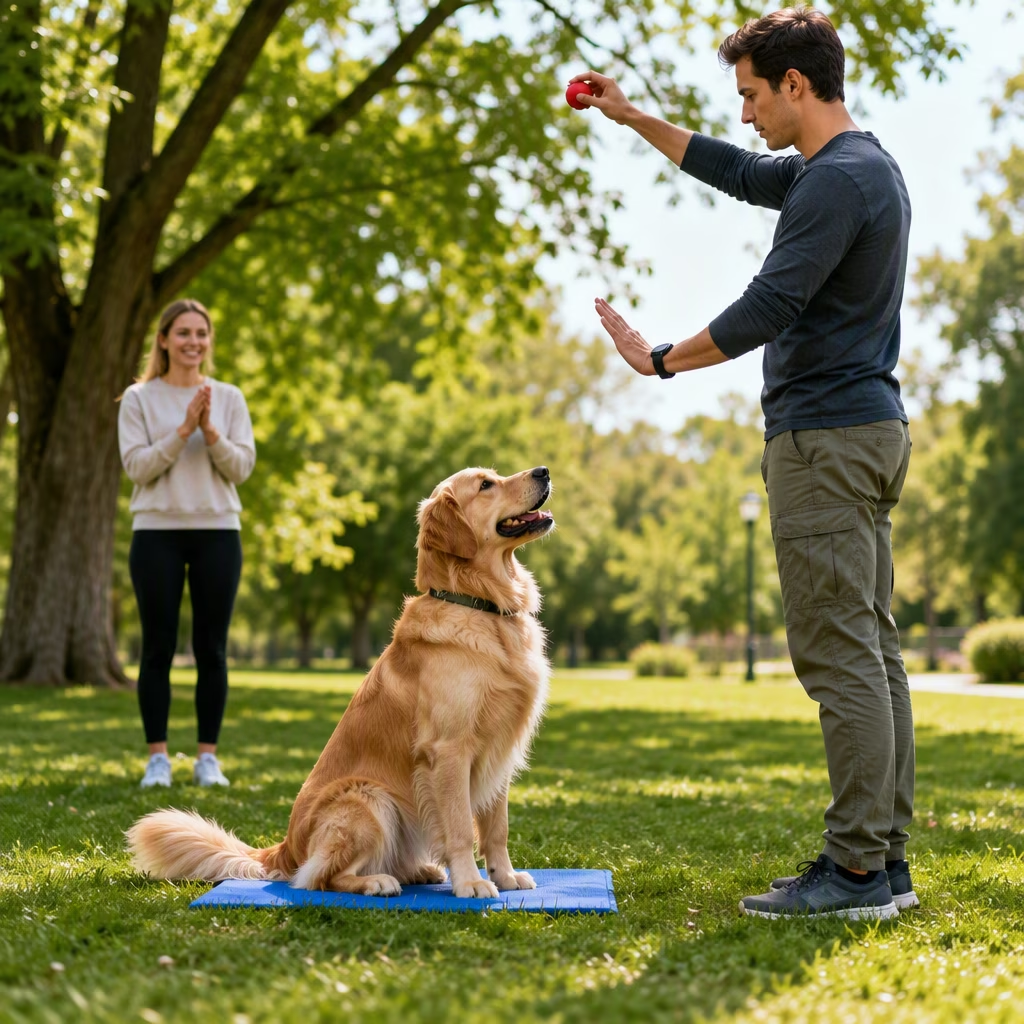
Indoor Fetch and Tug Games
Fetch does not require a park. If there is enough floor space, a soft ball can be tossed down a hallway or across a living room. Many households grew up with the rule no balls in the house, so keep the game controlled and avoid areas with fragile objects. For dogs that prefer tug-of-war or keep-away, those activities also burn energy and build interaction. A short game of tug can be especially useful for high-energy dogs when outdoor time is limited. To increase movement during fetch, toss the ball down a set of stairs or along a longer hallway, but always watch that the dog does not knock over furniture or slip on hard floors.
Teach New Tricks with Clicker Training
Extra time at home is a perfect opportunity for training. Using a clicker and small, bite-size treats, an owner can teach a dog new behaviors in short, positive sessions. Tricks such as wave, spin, roll over, and play dead are not only entertaining but also challenge the dog's mind. A sample progression might include:
-
Wave: lure the paw upward, click, and reward.
-
Spin: guide the dog in a circle, then add a verbal cue.
-
Play dead: shape a down position onto the side, click, and reward calm stillness.
Positive reinforcement and consistency help the dog learn quickly. A short training session of five to ten minutes can be more tiring than a long walk because it requires focused thinking.
| Activity | Main Benefit | Safety Tip |
|---|---|---|
| Hidden kibble hunt | Encourages natural foraging and scent work | Start with easy hiding spots |
| Puzzle feeder | Slows eating and builds problem-solving skills | Choose a simple model first |
| Snuffle mat | Provides nosework and mental enrichment | Supervise to prevent chewing the fleece |
| Indoor fetch or tug | Burns physical energy and builds bonds | Clear the space and avoid slippery floors |
| Clicker training | Teaches new tricks and focus | Keep sessions short and positive |
When a dog's routine changes, boredom and restlessness can build quickly. Turning meals into games, creating a snuffle mat, playing safe indoor fetch, and teaching new tricks all satisfy a dog's need for exercise, mental engagement, and companionship. With these strategies, a quiet day at home can become an enriching adventure for both the dog and the owner, even when outdoor adventures must wait.