
How Learning Dog Body Language Made Me a Safer, More Patient Owner
In the first months of 2026, I finally stopped translating my dog’s growls and tail wags through a human filter. A tense encounter at a park, where a dog stood rigid and high-tailed while its owner called it friendly, made me realize how much I was missing. Dogs are non-verbal animals, so they rely on body language more than sound. Vocalization takes second place. Once I began watching ears, eyes, tails, and posture, the world looked different.
A dog’s body is not a megaphone; it is a volume dial turned so low that you must read the muscles rather than hear the noise. Understanding that low-volume language can prevent danger, support training, and reveal behavior problems before they escalate.
Why Body Language Is a Safety Skill
When two dogs interact, their body language is almost a conversation. It may even look like a dance, but I now see it as a slow-motion chess match where every paw shift changes the board. Observing those moves helps me tell whether harmless play is about to tip into a dog fight. A dog can signal a sensed threat without making a sound.
Confident and Happy Dogs
A confident dog stands straight and tall with head high, ears perked, eyes bright. The mouth may be slightly open but relaxed. The tail may sway gently, curl loosely, or hang relaxed. That dog is friendly and at ease.
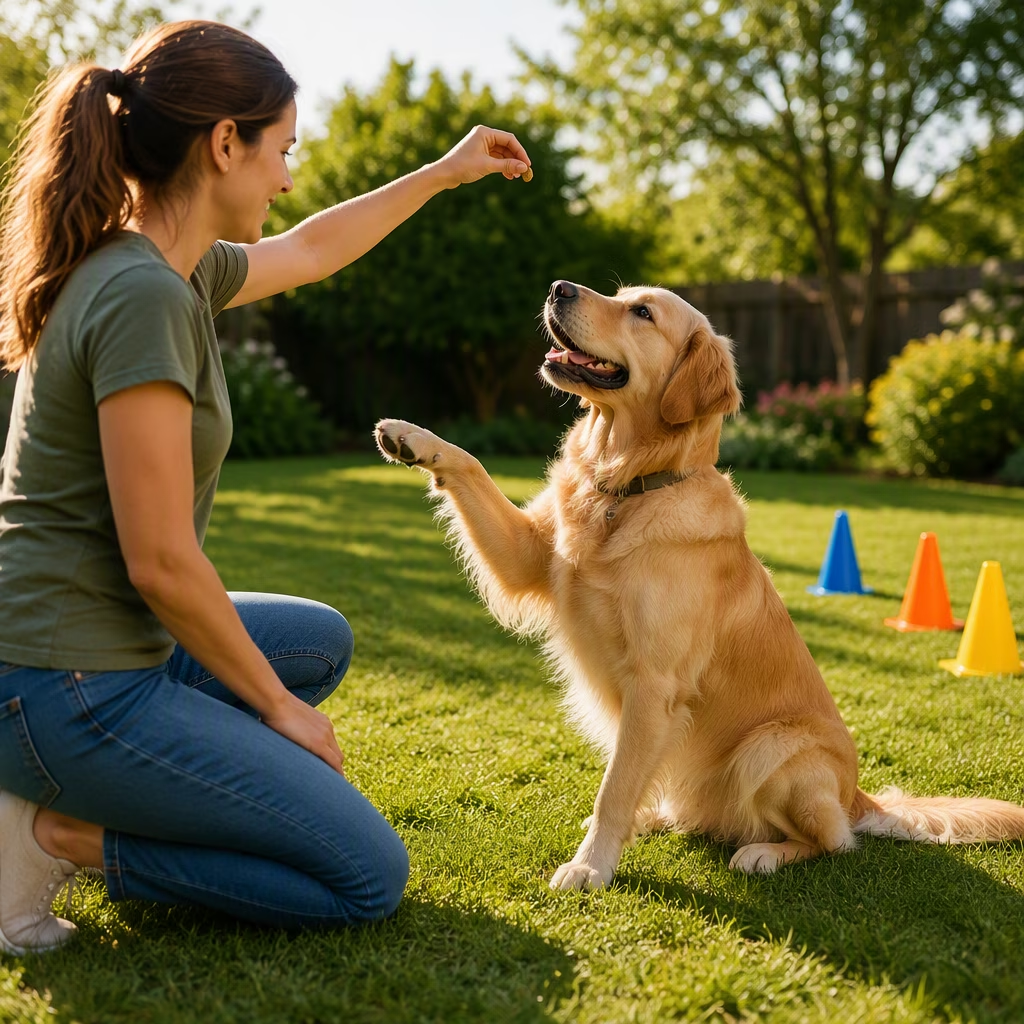
A happy dog shows much of the same, plus a tail wag and light panting. It seems even more content, with no signs of anxiety. When relaxed, a happy dog may let out a soft sigh, which I now read as a little exhale of safety.
Playfulness and Excitement
A playful dog is joyful. Ears up, eyes bright, tail wagging rapidly. It may jump and run, and often offers the play bow: front legs stretched forward, head straight, rear end up and wiggling. That bow is an invitation, as clear as a child holding out a ball.
An excited dog combines happy and playful body language, then adds wide eyes, a hanging tongue, panting, and sometimes whining. Some dogs become hyperactive, jumping on people, barking loudly, or getting the zoomies. Excitement is not always good. Overstimulated dogs can become exhausted or stressed. I learned to redirect that energy to a training command, chew toy, or exercise, and to avoid physical restraint or leash-pulling.
Anxiety and Fear
An anxious dog often lowers its head, holds ears partially back, and stretches its neck out. It may furrow its brow or bow its head, stand tense, and tuck its tail. I now watch for yawning, lip licking, and whale eye—the white of the eye showing like a small warning lamp. An anxious dog can overreact and may become fearful or aggressive. If I know the dog, I try to divert attention carefully, but never provoke it.
A fearful dog shows similar signals with more intensity: body tense and low, ears flat back, eyes narrowed and averted, tail tucked, body trembling. It may even urinate or defecate, whine, growl, or bare teeth in self-defense. In that state, a dog can turn aggressive quickly. The best move is to remove myself calmly. If it is my dog, I stay calm and confident, never comforting or punishing, and guide the dog to a quieter place.
Aggression
Aggression usually starts as anxiety or fear, then hardens. An aggressive dog plants all feet firmly, may lunge, pins ears back, and fixes narrow but piercing eyes. The tail may be straight and high—sometimes even wagging—and the hairs on the back may stand on edge. That high, stiff wag is not friendliness; it is a flag of tension. The dog may bare teeth, snap its jaw, growl, or bark threateningly. In these cases, I seek professional help rather than trying to correct the behavior myself.
Submission and Dominance Are a Dynamic, Not a Label
Many people misunderstand submission and dominance. Dominance is not a behavior; it is a dynamic in a relationship between two dogs. Dogs in groups do not usually build rigid hierarchies the way some animals do, though a loose pecking order can develop naturally.
A submissive dog communicates that it poses no threat by choice, not by force. It may lower its head, avert its eyes, keep the tail low or neutral, roll onto its back, expose the abdomen, nuzzle or lick the other dog, sniff the ground, or divert attention. A tucked tail is not always terror; sometimes it is a white flag stitched to the spine. A dog rolling belly-up is passing a note that says, I am not a threat. I also remember that submissive behavior can appear during play, so I assess the whole scene before deciding what is happening.
My Quick Field Guide
| Signal | What I Look For | What It Often Means |
|---|---|---|
| Confidence | Tall stance, relaxed mouth, bright eyes | At ease, friendly |
| Happiness | Confident signals plus tail wag, light pant | Content, approachable |
| Playfulness | Play bow, rapid tail, bouncing | Invitation to play |
| Excitement | Wide eyes, panting, zoomies | High arousal, can tip into stress |
| Anxiety | Whale eye, lip licking, tucked tail | Discomfort, need space |
| Fear | Trembling, low body, ears back | Defensive, may flee or fight |
| Aggression | Stiff high tail, hard stare, bared teeth | Threat, increase distance |
What I Do Differently Now
-
I read a dog’s ears, eyes, and tail before I greet it.
-
I treat lip licking, yawning, and whale eye as pressure valves, not obedience problems.
-
I watch dog play the way I watch a conversation, not a background show.
-
I redirect excitement instead of grabbing or shouting.
-
I treat a stiff, high tail as caution, even if it wags.
Learning this language has not made me a dog whisperer. It has made me a better listener. Every dog is always speaking; the skill is learning to read the syntax of muscle, ear, and tail. In 2026, that skill feels more necessary than ever, especially as more dogs live in busy human environments and need people who can hear them without a bark.