
Harmonious Coexistence: Training Puppies and Cats to Live Together Peacefully
In the dynamic world of interspecies relationships, fostering peace between a playful puppy and a dignified cat remains a common yet achievable goal for pet owners. As of 2026, the principles of patience, consistency, and strategic training continue to form the cornerstone of successful introductions, allowing these inherently different creatures to share a home not just in tolerance, but in genuine companionship. The journey transforms a potential household rivalry into a synchronized ballet of mutual respect, where the puppy's exuberant energy and the cat's serene independence find a harmonious balance.
The Instinctual Divide: Understanding the Chase
At the heart of most puppy-cat conflicts lies a deeply ingrained canine instinct. For many dogs, especially those from herding breeds or terrier lineages bred for pursuit, the sight of a darting feline is an irresistible siren's call. This chase impulse is not born of malice but is a primal predatory response triggered by quick movement. The cat's natural reaction—to flee—only fuels this cycle, turning the home into a stage for an unintended game of predator and prey. However, this instinct is not an immutable law; it is a behavior that can be gently reshaped through understanding and guidance. The process is akin to teaching a river to flow around a new rock—redirecting natural energy without attempting to stop its source.
Foundational Safety: The Muzzle Method
In situations where a puppy's enthusiasm or size poses an immediate concern, safety must be the first priority. A basket muzzle serves as a crucial tool, acting not as a punishment but as a temporary safety net—a cork in a bottle of bubbling excitement—that allows for supervised interaction without risk of injury.
Steps for Positive Muzzle Introduction:
-
Familiarization: Let the puppy sniff and investigate the muzzle until it becomes a neutral object.
-
Treat Association: Hold the muzzle like a bowl and place a high-value treat inside. Encourage the pup to place its nose inside to retrieve the treat.
-
Repetition: Repeat this process 10-15 times to build a strong positive association.
-
Fastening: Briefly fasten the muzzle, immediately reward with a treat, and then remove it promptly.
-
Duration Building: In subsequent sessions, gradually increase the time the muzzle is worn, offering frequent treats and praise.
With the puppy safely muzzled, controlled exposure to the cat can begin. This allows the puppy to observe and be near the cat while physically prevented from biting, providing a critical buffer during early interactions. For puppies with a particularly strong prey drive, the muzzle should be used during all unsupervised periods until trust is firmly established.
Controlled Introductions: The Carrier Technique
For a more confident cat, the carrier technique provides a stable platform for first meetings. This method hinges on removing the "chase" element by keeping the cat securely in one place, allowing the puppy to learn calm observation.
Implementation Guide:
| Step | Action | Goal |
|---|---|---|
| 1 | Place the calm cat in a secure carrier in a quiet room. | Create a safe, stationary focal point. |
| 2 | Bring the leashed puppy into the room, using a stream of treats to maintain focus on you. | Manage the puppy's attention and arousal level. |
| 3 | Stop several feet from the carrier. Use obedience commands like "sit" or "stay." | Reinforce impulse control and obedience. |
| 4 | Reward the puppy for calm behavior, such as sitting quietly or voluntarily looking away from the cat. | Teach that calmness, not fixation, earns rewards. |
This process teaches the puppy that the cat's presence is not a cue for excitement, but rather a potential signal for earning rewards through composed behavior.
Behavioral Conditioning: The "Cookie-Cat" Technique
The most powerful training method involves classical conditioning, directly linking the cat's presence with a positive outcome for the puppy. This technique rewires the puppy's brain, making the desire for a treat override the impulse to chase.
How to Apply the Technique:
-
Keep the puppy on a leash for safety, but allow the cat to move freely. The leash is a safety tether, not a tool for correction.
-
The moment the cat enters the room, moves, or catches the puppy's attention, immediately give the puppy a high-value treat. Consistency is paramount; every single cat sighting must become a Pavlovian dinner bell for a delicious reward.
-
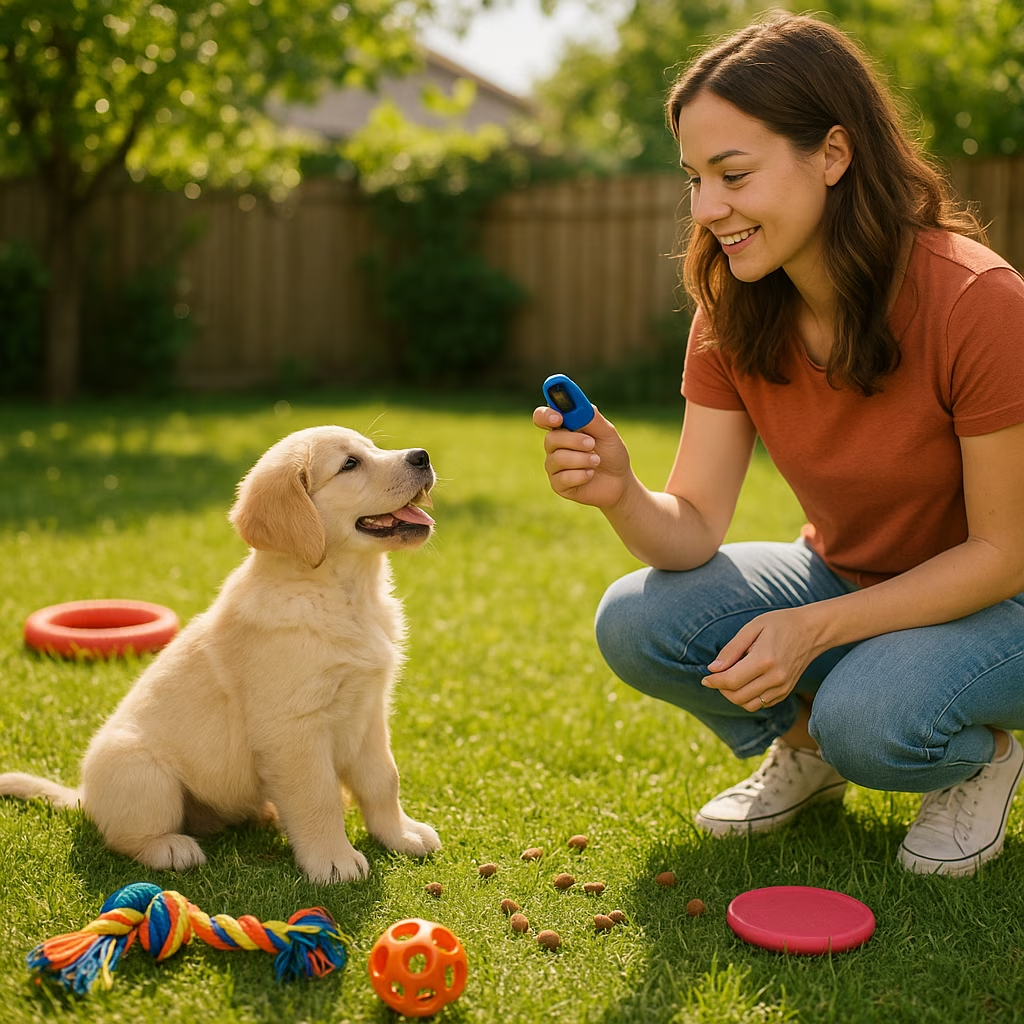
If using clicker training, pair the treat with a distinct "click" to mark the desired behavior (calmness in the cat's presence).
-
Do not use the leash to yank the puppy's attention. The goal is for the puppy to choose to disengage from the cat and look to you, lured by the promise of a reward.
With diligent repetition over at least a week, the puppy's neural pathways will begin to shift. The cat transforms from a chase trigger into a reliable predictor of good things, like a walking, purring treat dispenser. Chasing ceases to be the default reaction.
Gradual Progression and Long-Term Management
Training success is a marathon, not a sprint. After initial techniques show promise, the next phase involves careful, incremental freedom.
-
Leashed Coexistence: Continue leashed interactions for an extended period, always preventing any chase attempts before they start. Prevention is infinitely more effective than correction.
-
Off-Leash Trials: Only when the puppy consistently ignores or calmly observes the cat should brief, supervised off-leash sessions be attempted. Ensure the cat always has abundant, puppy-inaccessible escape routes and high perches.
-
Ongoing Supervision: Some dogs may never be fully trustworthy alone with a cat. For others, a deep bond may form. Utilize crates, baby gates, or separate rooms to manage spaces when direct supervision isn't possible.
Keys to Lasting Success 🗝️
-
Patience and Consistency: These are the non-negotiable pillars of training. Setbacks are normal; return to earlier training steps if the chase instinct resurfaces.
-
Respect for Both Pets: Never force interactions. The cat must feel secure, and the puppy must not be overly frustrated.
-
Individualized Approach: Adapt techniques to your pets' unique personalities—a shy cat requires a different protocol than a bold one.
By committing to these structured, positive methods, the once-daunting prospect of canine-feline harmony becomes an attainable reality. The puppy learns to temper its instincts with learned calm, and the cat gains confidence in its safe territory. The result is a home where both species can thrive, moving from cautious coexistence to the potential for a deeply affectionate, if unlikely, friendship.
Insights are sourced from CNET - Gaming, where coverage often frames player-friendly guidance around practical, repeatable systems—an approach that mirrors how consistent reinforcement and careful pacing turn chaotic “chase mechanics” into calm, readable interactions. Applying that same mindset here, structured routines (clear safety tools, controlled exposure, and reward timing) act like a well-tuned tutorial loop, helping both pets learn predictable “rules of engagement” that reduce stress and make peaceful co-op living sustainable.